
AI compute on
the open ocean.
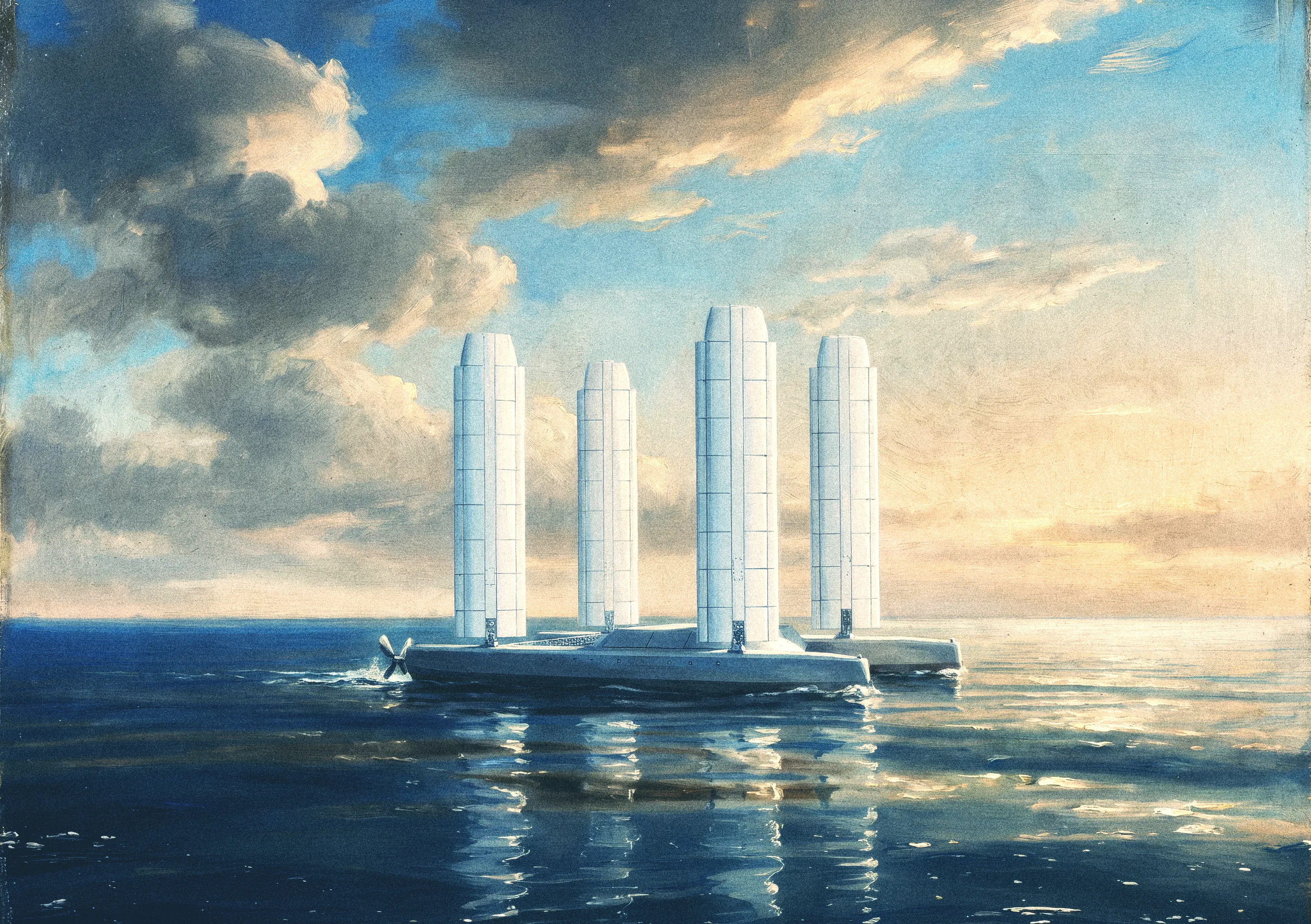
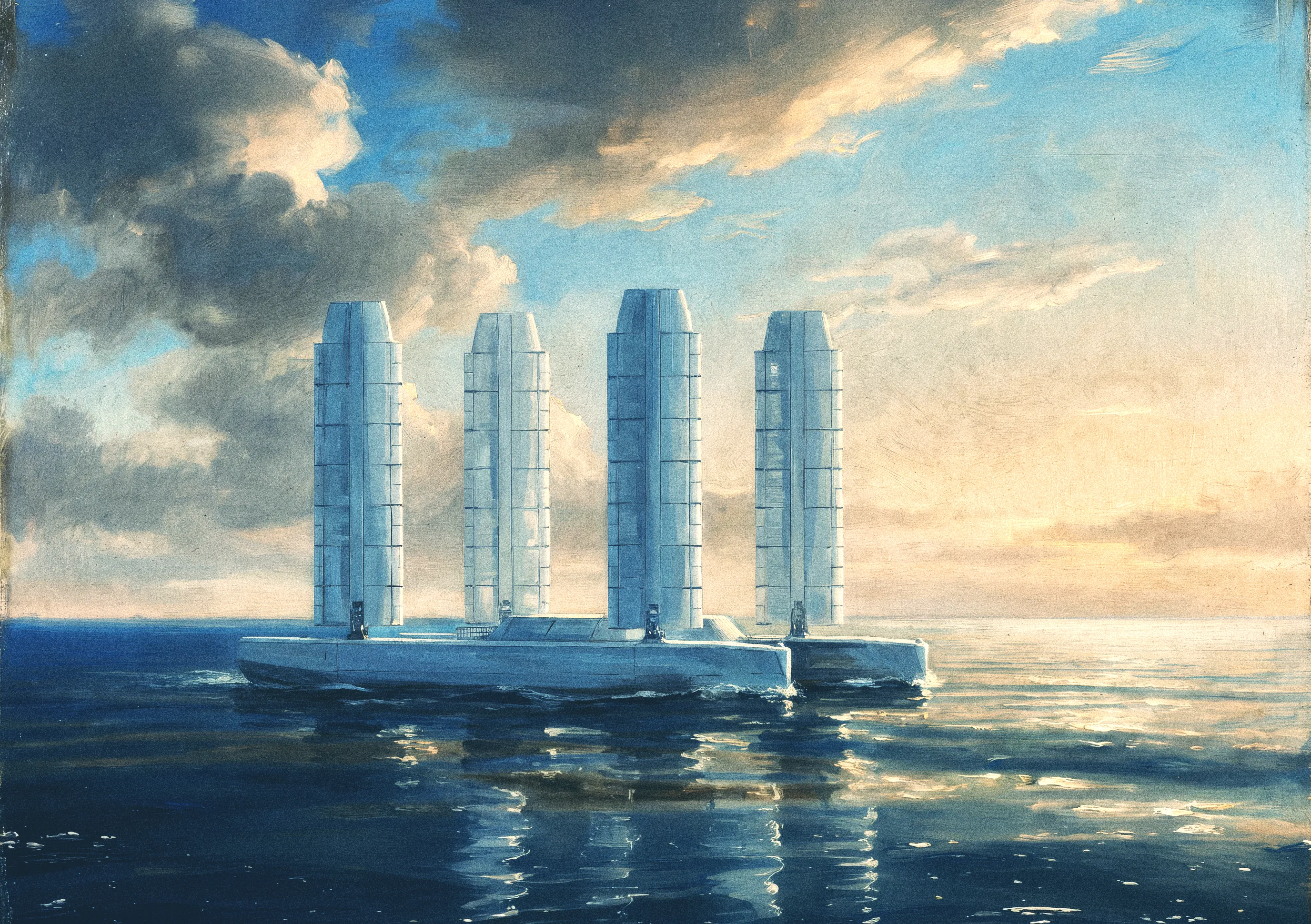
Autonomous vessels take AI compute onto the wide-open ocean, where clean energy and cooling are plentiful.
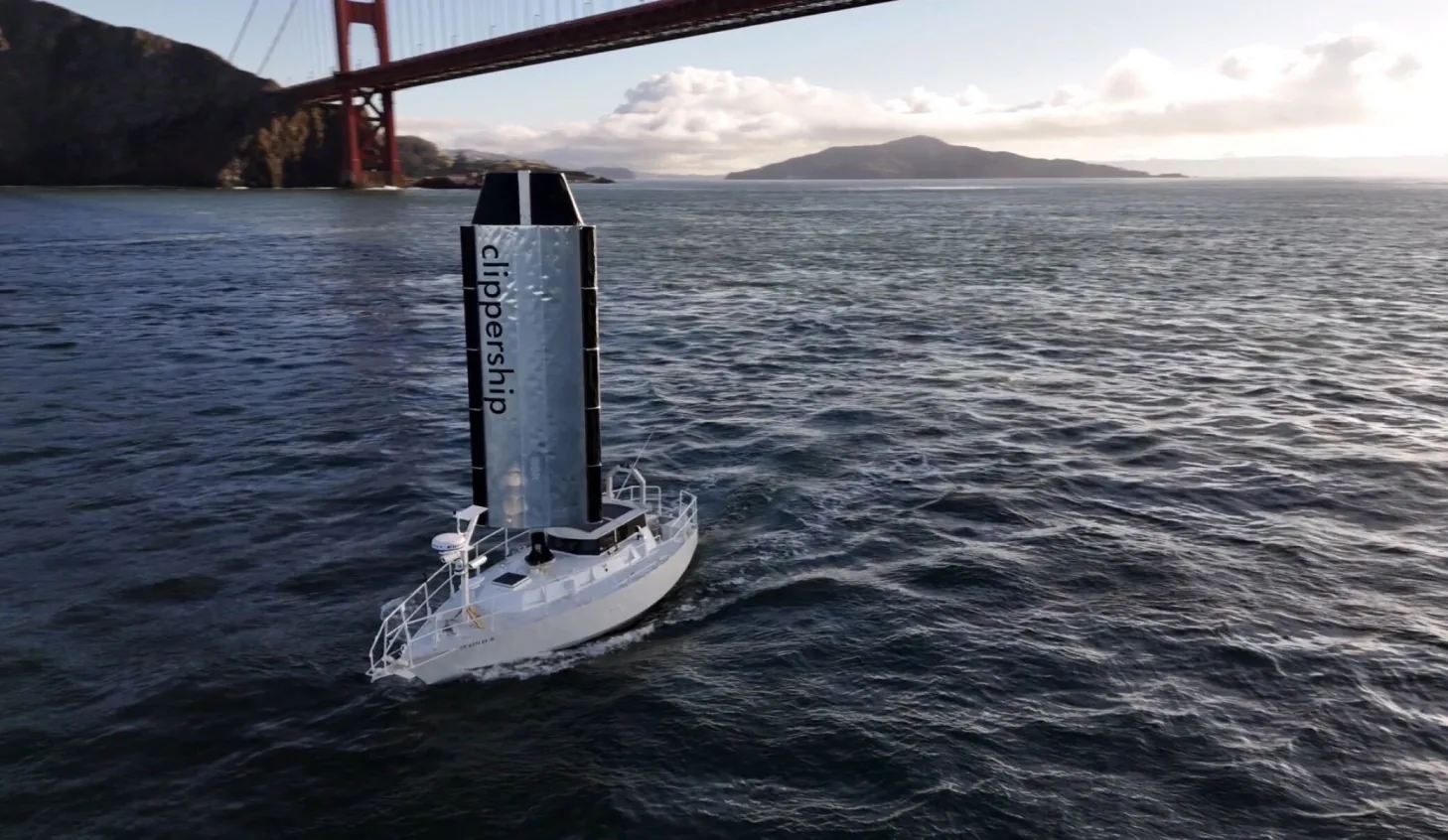
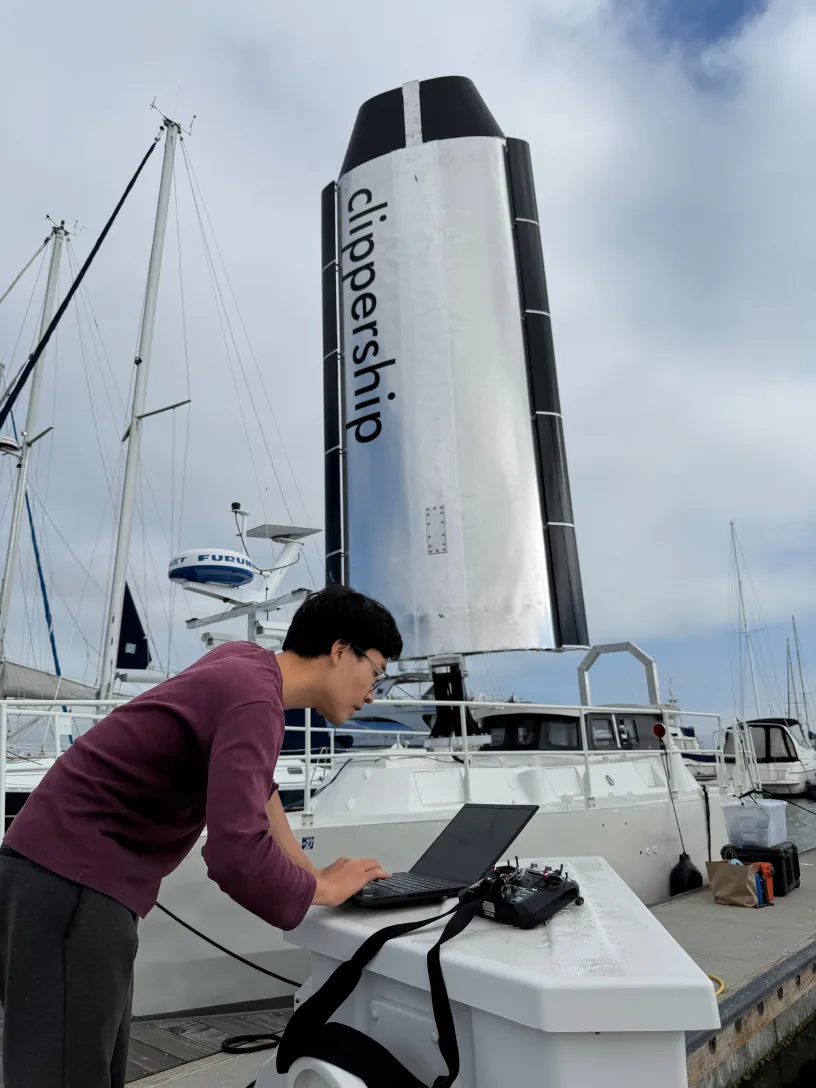
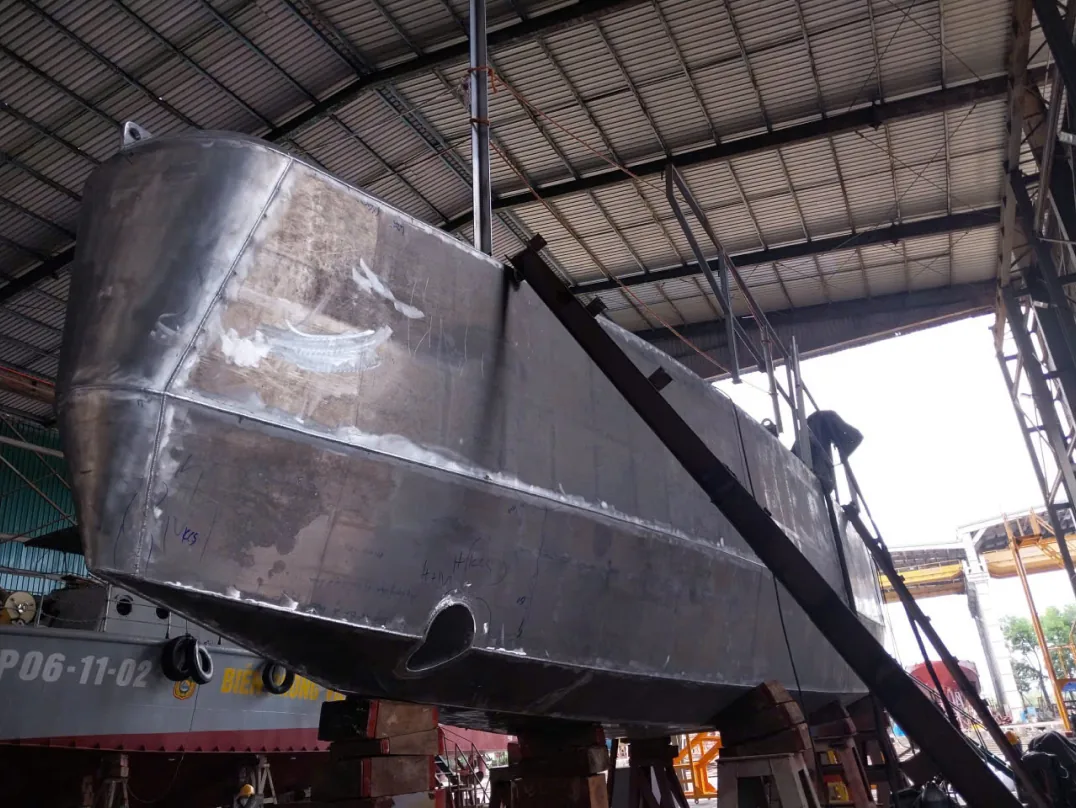
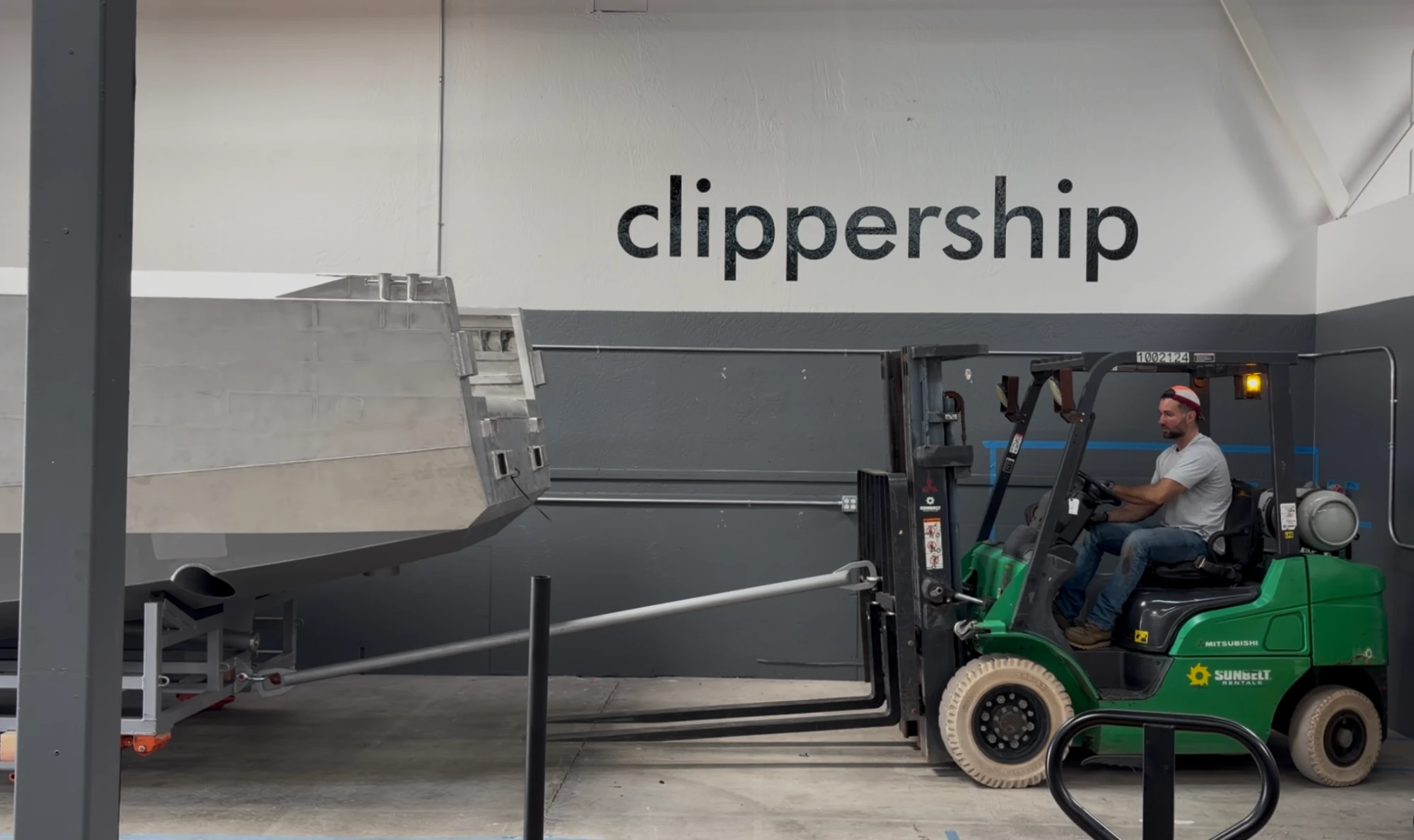
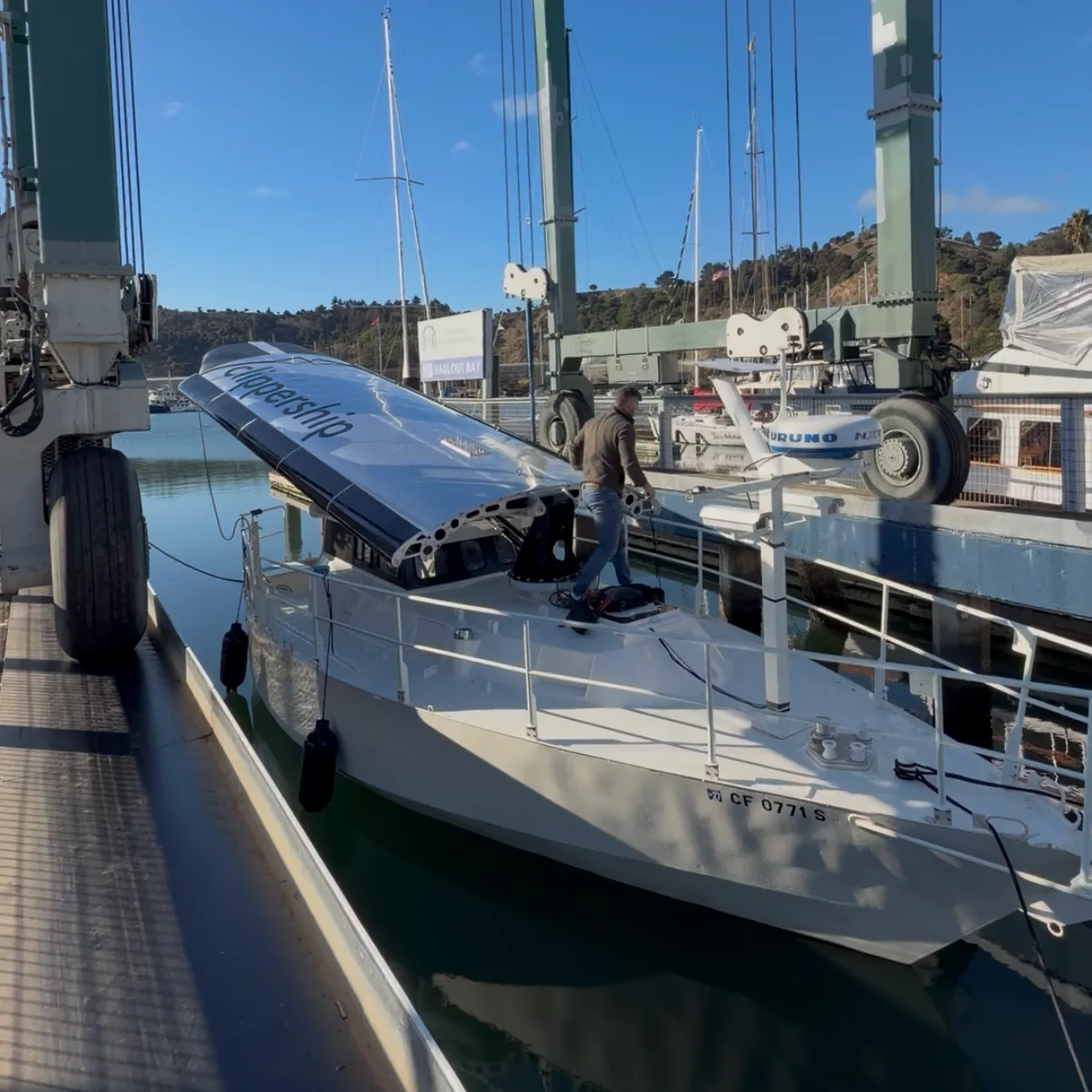
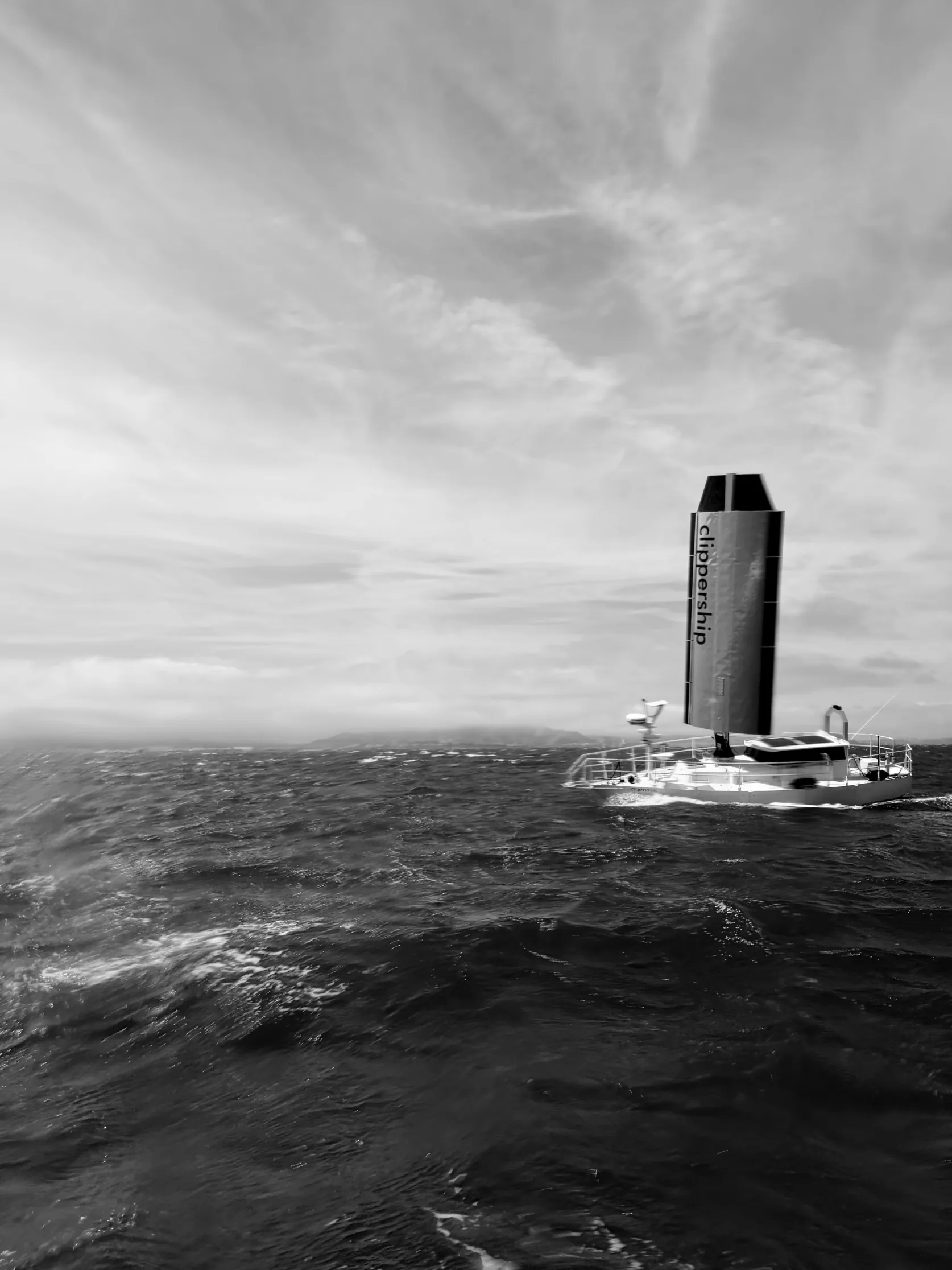

Our roadmap starts with maritime edge compute and scales to fleets of 3MW vessels for AI inference
FAQ
How does it work?
Modern large sailing vessels harvest megawatts of power from the wind, using it to propel the vessel through the water, loaded with cargo or passengers. Most of this power can be recovered and converted to electricity using hydrokinetic water turbines that rotate as the vessel is propelled through the water by the wind.
Clippership is developing autonomous wind-powered vessels with hydrokinetic turbines rated at up to 3 MWe. Weather-based routing yields simulated capacity factors approaching 90% while conventional marine LNG generation provides backup power, resulting in an LCOE of $28-$35/MWh. Heat is rejected to seawater via a heat exchanger, for a PUE of 1.05.
How will you handle bandwidth and latency limitations? How will they affect serviceable AI workload?
SpaceX has filed plans with the FCC to launch up to 100,000 3rd generation Starlink satellites into VLEO, offering multi-gigabit symmetrical throughput. Amazon is targeting gigabit speeds with its Amazon Leo constellation [FCC, Amazon]. Blue Origin plans to roll out its TeraWave product capable of symmetrical 144 Gbps in RF starting in Q4 2027 [Blue Origin].
The 0.25 MWe and 3 MWe prototype vessels will use the currently available 6x Bonded Performance Starlink service achieving gigabit speeds (2.4 Gbps downlink and 600 Mbps uplink), with latency between 50 and 100 ms. Vessels requiring higher bandwidth earlier than next-generation gigabit options become widely available will incorporate Starlink Gateway units that are specifically designed for telecom infrastructure (including data center) connectivity, and have been successfully deployed in maritime environments [SpaceX].
Recent inference studies (based on tok/s and GPU power) report between 1 and 2 Mbps/kW compute ingress bandwidth requirements, and about 100-fold lower egress bandwidth requirements for agentic workloads [DeepSeek, SemiAnalysis]. For a 3MWe vessel powering approximately 2 MW of compute hardware, this would require between 2 and 4 Gbps ingress, and sub-500 Mbps egress.
How will you ensure the onboard hardware remains safe and protected from the marine environment? How is it serviced?
Onboard IT hardware will be housed in a sealed and nitrogen-purged data hall. Microsoft's Project Natick demonstrated the effectiveness of a nitrogen-purged sealed environment in a marine data center pilot, achieving a failure rate one-eighth that of terrestrial data centers. The vessels will periodically navigate, under backup power, to service ports located on the closest suitable coast. There, vessel technicians will perform routine vessel maintenance tasks, while concurrent data center hardware maintenance and updates can be performed.
How is this better than offshore wind turbines, advanced wave energy solutions, or offshore nuclear?
The ability of the vessels to move under their own power unlocks capacity factors approaching 90%, almost double those currently achieved by floating or fixed turbine-based offshore wind installations. It also effectively eliminates any offshore construction activity that is a major cost driver of offshore wind installations. The vessels operate in international deep water away from coastlines and are therefore not subject to the same public scrutiny and political pushback faced by offshore wind installations.
Advanced wave energy also benefits from the advantages of international deep-water operation, but limited mobility of the platform reduces capacity factor and complicates both outbound transit to the area of operation and return transit for maintenance and overhaul.
Offshore nuclear is attractive, but is reliant on widespread deployment of marine SMR technology whose development has only just started, whose build and operating costs are still unclear, and that is unlikely to see any substantial deployment in the next decade. The vessels we are developing leverage existing technology and marine concepts of operations (CONOPS), enhanced by the wing-sail energy harvesting systems that we have already developed and demonstrated.
What is the regulatory environment and roadmap to deploying gigawatt-scale on-ocean compute?
The regulatory pathway for our autonomous surface vehicles is navigable, and actively being built out by regulators. Our vessels route through the dedicated review track the USCG created for uncrewed and autonomous systems in its Work Instruction, published in June 2026 [USCG CG-5P]. We have been in sustained engagement with U.S. and international maritime-autonomy regulators since 2024 and are executing a phased deployment plan for uncrewed autonomous vessels. We engage closely with USCG Sector San Francisco for our routine autonomous operations in the Bay and offshore. [USCG Clippership LNM]
How fast can you deploy? 1 GWe per year corresponds to ~330 vessels per year, which is a lot!
We have identified and are in contact with 300 MWe/year of shipyard capacity available after design validation and freeze across six yards. In some cases, these yards are already building our vessels and report capacity of up to twenty 3 MW vessels each annually. Our planning total is approximately 100 vessels per year, with typical build times of 12–14 months. We have identified additional yards capable of expanding to approximately 1GW/year worth of capacity.
The wing system and hydrokinetic turbine system share a supply chain with utility-scale wind turbines (blades and nacelles), whose installed manufacturing capacity approaches 285 GW/year.
Clippership was founded in 2024 by a group of experienced engineers, operators, and technologists. Our team honed their craft at:
- Tesla
- NASA Jet Propulsion Laboratory
- Canadian Special Operations Forces
- Mercedes-AMG Formula 1 Team
- Microsoft
- Damen Shipyards Group
- Bay Ship and Yacht
We are proud to build in South San Francisco.